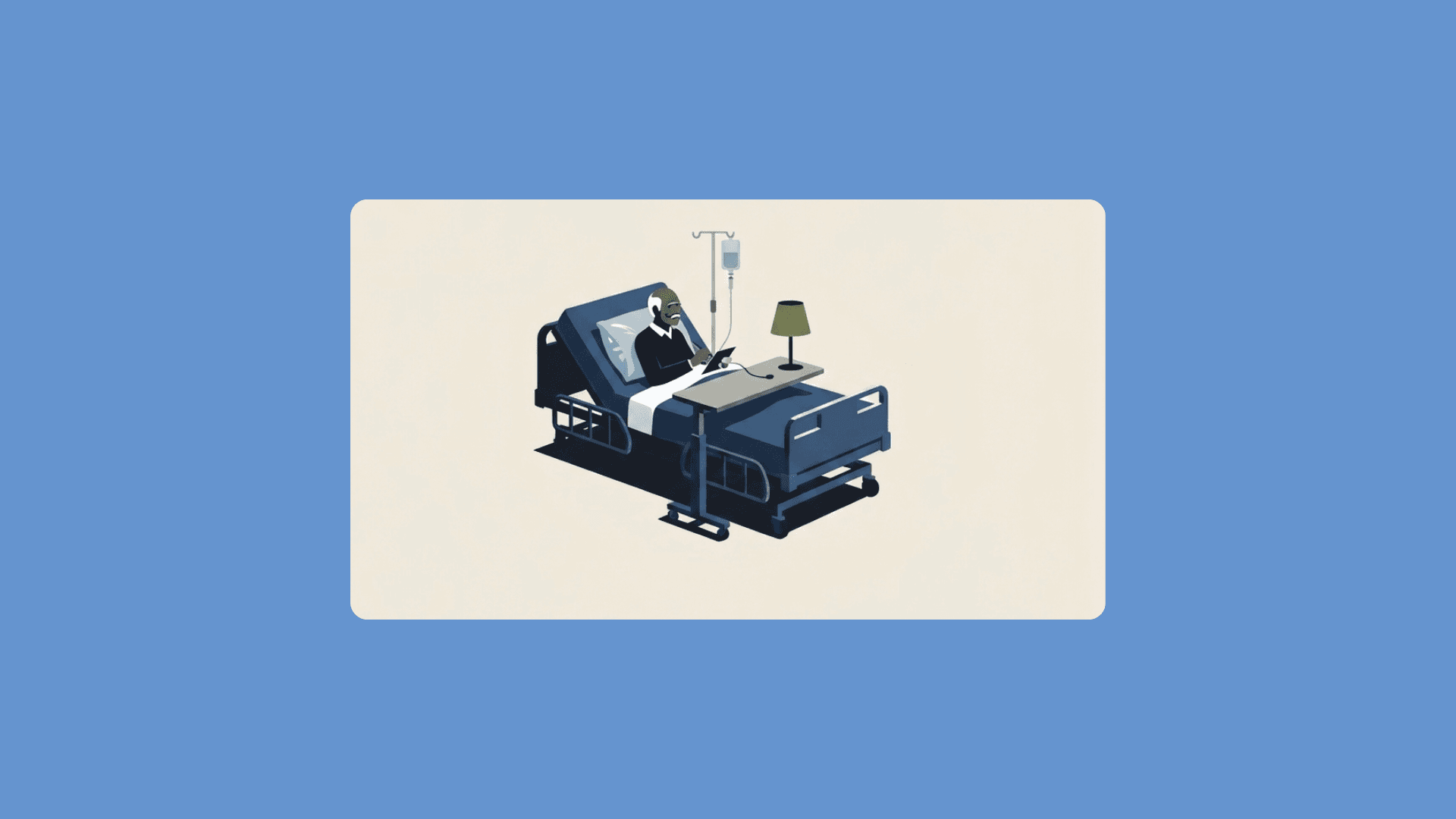
For Later.
Overview
For Later is a digital advance care planning tool that helps people document their end-of-life wishes before a crisis forces the conversation. Most people put this off, not because they don't care, but because there's no easy entry point, no clear format, and no one prompting them to start. For Later gives people a guided, low-friction way to record their medical, legal, and personal wishes, so their loved ones are never left guessing during the hardest moment of their lives.
Categories
Lean Startup | End of life
Healthcare
Client
Go to market
Duration
4 months


Challenge
Roughly 80 % of people never document their end-of-life wishes. When a medical crisis hits, families and doctors are left making decisions blind, often under emotional and time pressure.
Advance care planning exists as a concept, but almost nowhere does it exist as an accessible product. It's buried in legal paperwork, hospital intake forms, or one-off conversations that never get written down.
Approach
The "Why" behind the problem
We began with a broad exploration of end-of-life planning, mapping the ecosystem of existing services, interviewing people about how they think about death and loss, and researching legal frameworks for advance directives across countries. We also spoke directly with founders working in adjacent parts of the death space to understand how they navigated the emotional and business sides of this problem.
What we found was that people actually wanted to plan ahead and spare their families the burden. They were avoiding a system that was disjointed, analogue, and offered no one to actually talk to about it. The core obstacles were unexpected financial shock, the instinct to avoid planning until forced into it, and the sheer emotional overload dropped on whoever is left behind.
Picture 100 people. Each figure is one person.
About 80 of them have never written down what they want at the end of life.
About 20 have.
When a medical crisis hits, families and doctors decide without knowing, often under emotional and time pressure.
Look only at older adults in high-income countries and about 1 in 4 completes a full plan.
Advance care planning exists as a concept. Almost nowhere does it exist as an accessible product.
It lives in paperwork, forms and conversations that never get written down.
So we went looking. We mapped services, interviewed people, read legal frameworks and talked to founders in the field.
Avoidance is the strongest predictor of who never completes a plan.
People postpone the only version they have seen, a one-time legal document.
Even where the law recognises advance directives, adoption stays low.
The process feels like paperwork for your own death. Format is the barrier.
Requirements differ from country to country, and most tools hardcode one legal template.
A plan has to adapt to where someone lives.
We turned all of this into one How Might We question. Keep scrolling to read it.
How Might We
How might we make documenting end-of-life wishes feel as approachable and habitual as any other life admin task, rather than a one-time legal burden?
Solution
For Later combines two layers. A one-time qualified electronic signature process, using eIDAS-compliant digital signing, to make the documentation legally valid. And an NFC keychain paired with an annual review service, so the plan stays current and is physically accessible in an emergency, not buried in a drawer or a forgotten login. The product is designed around a Duolingo-style logic: short, low-pressure prompts that build a complete plan over time instead of demanding it all at once.

A legal plan asks for everything at once. That is one big task for one day.
For Later breaks it into short, low-pressure prompts in a Duolingo-style rhythm.
Each prompt adds to the plan, so a complete plan builds over time instead of all at once.
Once, a qualified electronic signature (eIDAS-compliant) makes the documentation legally valid.
An NFC keychain keeps the plan reachable in an emergency, and an annual review keeps it current.
During life, a person considers their medical wishes.
Without a plan, the wishes stay unclear. Treatment suffers and the family carries emotional stress.
With For Later, documentation is easy and efficient. The wishes are clear and actionable, they are met, and the family can honor them and grieve.
One starting point, two paths. The plan decides which one a family walks.
Make decisions for yourself, as long as you can, while protecting your family from this responsibility.
A turnkey platform that turns €50K intensive-care cases into €5K cases, while acting as a service differentiator.
About 75 million adults aged 35 and over live in Germany and the Baltics.
About 15 million of them are motivated, around 20%.
We start with 5 to 15 thousand beachhead users in death-positive communities in Germany and the Baltics.
Other players cover wills, last wishes, grief support or analog templates.
ForLater is the only company with an ACP focus, optimized for Europe and (health) insurers.
We tested the idea by hand. 20+ people talked with us directly about a topic most people avoid.
The first round scored 7 out of 25. After we changed how we framed it, the next scored 30 out of 50.
For people who wanted to act, we could remove the barriers in their way.
One person went from silence to answering over WhatsApp, a week later and unprompted: who is your in-case-of-emergency person?
A jury and an insurance industry expert responded positively to the direction.
Outcome
30/50
concierge test score, proving that for people who wanted to act, we could remove the barriers stopping them from getting it done
20+
people spoken to directly about a topic most people actively avoid
✓
Jury and an insurance industry expert responded positively to the direction
People don't prepare for death even when they're aware they should. The barrier isn't awareness, it's avoidance.
What stayed with us was pivoting is perfectly fine when it is required by the customers, it was watching someone go from silence to answering "who is your in-case-of-emergency person" over WhatsApp, seven days later, unprompted. Framing is what makes a sensitive topic approachable. We designed For Later around that and putting it out in the world solidified the problem is real and the for later works.

For Later.
Overview
For Later is a digital advance care planning tool that helps people document their end-of-life wishes before a crisis forces the conversation. Most people put this off, not because they don't care, but because there's no easy entry point, no clear format, and no one prompting them to start. For Later gives people a guided, low-friction way to record their medical, legal, and personal wishes, so their loved ones are never left guessing during the hardest moment of their lives.
Categories
Lean Startup | End of life
Healthcare
Client
Go to market
Duration
4 months
Challenge
Roughly 80 % of people never document their end-of-life wishes. When a medical crisis hits, families and doctors are left making decisions blind, often under emotional and time pressure.
Advance care planning exists as a concept, but almost nowhere does it exist as an accessible product. It's buried in legal paperwork, hospital intake forms, or one-off conversations that never get written down.
Approach
The "Why" behind the problem
We began with a broad exploration of end-of-life planning, mapping the ecosystem of existing services, interviewing people about how they think about death and loss, and researching legal frameworks for advance directives across countries. We also spoke directly with founders working in adjacent parts of the death space to understand how they navigated the emotional and business sides of this problem.
What we found was that people actually wanted to plan ahead and spare their families the burden. They were avoiding a system that was disjointed, analogue, and offered no one to actually talk to about it. The core obstacles were unexpected financial shock, the instinct to avoid planning until forced into it, and the sheer emotional overload dropped on whoever is left behind.
Picture 100 people. Each figure is one person.
About 80 of them have never written down what they want at the end of life.
About 20 have.
When a medical crisis hits, families and doctors decide without knowing, often under emotional and time pressure.
Look only at older adults in high-income countries and about 1 in 4 completes a full plan.
Advance care planning exists as a concept. Almost nowhere does it exist as an accessible product.
It lives in paperwork, forms and conversations that never get written down.
So we went looking. We mapped services, interviewed people, read legal frameworks and talked to founders in the field.
Avoidance is the strongest predictor of who never completes a plan.
People postpone the only version they have seen, a one-time legal document.
Even where the law recognises advance directives, adoption stays low.
The process feels like paperwork for your own death. Format is the barrier.
Requirements differ from country to country, and most tools hardcode one legal template.
A plan has to adapt to where someone lives.
We turned all of this into one How Might We question. Keep scrolling to read it.
How Might We
How might we make documenting end-of-life wishes feel as approachable and habitual as any other life admin task, rather than a one-time legal burden?
Solution
For Later combines two layers. A one-time qualified electronic signature process, using eIDAS-compliant digital signing, to make the documentation legally valid. And an NFC keychain paired with an annual review service, so the plan stays current and is physically accessible in an emergency, not buried in a drawer or a forgotten login. The product is designed around a Duolingo-style logic: short, low-pressure prompts that build a complete plan over time instead of demanding it all at once.
A legal plan asks for everything at once. That is one big task for one day.
For Later breaks it into short, low-pressure prompts in a Duolingo-style rhythm.
Each prompt adds to the plan, so a complete plan builds over time instead of all at once.
Once, a qualified electronic signature (eIDAS-compliant) makes the documentation legally valid.
An NFC keychain keeps the plan reachable in an emergency, and an annual review keeps it current.
During life, a person considers their medical wishes.
Without a plan, the wishes stay unclear. Treatment suffers and the family carries emotional stress.
With For Later, documentation is easy and efficient. The wishes are clear and actionable, they are met, and the family can honor them and grieve.
One starting point, two paths. The plan decides which one a family walks.
Make decisions for yourself, as long as you can, while protecting your family from this responsibility.
A turnkey platform that turns €50K intensive-care cases into €5K cases, while acting as a service differentiator.
About 75 million adults aged 35 and over live in Germany and the Baltics.
About 15 million of them are motivated, around 20%.
We start with 5 to 15 thousand beachhead users in death-positive communities in Germany and the Baltics.
Other players cover wills, last wishes, grief support or analog templates.
ForLater is the only company with an ACP focus, optimized for Europe and (health) insurers.
We tested the idea by hand. 20+ people talked with us directly about a topic most people avoid.
The first round scored 7 out of 25. After we changed how we framed it, the next scored 30 out of 50.
For people who wanted to act, we could remove the barriers in their way.
One person went from silence to answering over WhatsApp, a week later and unprompted: who is your in-case-of-emergency person?
A jury and an insurance industry expert responded positively to the direction.
Outcome
30/50
concierge test score, proving that for people who wanted to act, we could remove the barriers stopping them from getting it done
20+
people spoken to directly about a topic most people actively avoid
✓
Jury and an insurance industry expert responded positively to the direction
People don't prepare for death even when they're aware they should. The barrier isn't awareness, it's avoidance.
What stayed with us was pivoting is perfectly fine when it is required by the customers, it was watching someone go from silence to answering "who is your in-case-of-emergency person" over WhatsApp, seven days later, unprompted. Framing is what makes a sensitive topic approachable. We designed For Later around that and putting it out in the world solidified the problem is real and the for later works.
For Later.
Overview
For Later is a digital advance care planning tool that helps people document their end-of-life wishes before a crisis forces the conversation. Most people put this off, not because they don't care, but because there's no easy entry point, no clear format, and no one prompting them to start. For Later gives people a guided, low-friction way to record their medical, legal, and personal wishes, so their loved ones are never left guessing during the hardest moment of their lives.
Categories
Lean Startup | End of life
Healthcare
Client
Go to market
Duration
4 months
Challenge
Roughly 80 % of people never document their end-of-life wishes. When a medical crisis hits, families and doctors are left making decisions blind, often under emotional and time pressure.
Advance care planning exists as a concept, but almost nowhere does it exist as an accessible product. It's buried in legal paperwork, hospital intake forms, or one-off conversations that never get written down.
Approach
The "Why" behind the problem
We began with a broad exploration of end-of-life planning, mapping the ecosystem of existing services, interviewing people about how they think about death and loss, and researching legal frameworks for advance directives across countries. We also spoke directly with founders working in adjacent parts of the death space to understand how they navigated the emotional and business sides of this problem.
What we found was that people actually wanted to plan ahead and spare their families the burden. They were avoiding a system that was disjointed, analogue, and offered no one to actually talk to about it. The core obstacles were unexpected financial shock, the instinct to avoid planning until forced into it, and the sheer emotional overload dropped on whoever is left behind.
Picture 100 people. Each figure is one person.
About 80 of them have never written down what they want at the end of life.
About 20 have.
When a medical crisis hits, families and doctors decide without knowing, often under emotional and time pressure.
Look only at older adults in high-income countries and about 1 in 4 completes a full plan.
Advance care planning exists as a concept. Almost nowhere does it exist as an accessible product.
It lives in paperwork, forms and conversations that never get written down.
So we went looking. We mapped services, interviewed people, read legal frameworks and talked to founders in the field.
Avoidance is the strongest predictor of who never completes a plan.
People postpone the only version they have seen, a one-time legal document.
Even where the law recognises advance directives, adoption stays low.
The process feels like paperwork for your own death. Format is the barrier.
Requirements differ from country to country, and most tools hardcode one legal template.
A plan has to adapt to where someone lives.
We turned all of this into one How Might We question. Keep scrolling to read it.
How Might We
How might we make documenting end-of-life wishes feel as approachable and habitual as any other life admin task, rather than a one-time legal burden?
Solution
For Later combines two layers. A one-time qualified electronic signature process, using eIDAS-compliant digital signing, to make the documentation legally valid. And an NFC keychain paired with an annual review service, so the plan stays current and is physically accessible in an emergency, not buried in a drawer or a forgotten login. The product is designed around a Duolingo-style logic: short, low-pressure prompts that build a complete plan over time instead of demanding it all at once.
A legal plan asks for everything at once. That is one big task for one day.
For Later breaks it into short, low-pressure prompts in a Duolingo-style rhythm.
Each prompt adds to the plan, so a complete plan builds over time instead of all at once.
Once, a qualified electronic signature (eIDAS-compliant) makes the documentation legally valid.
An NFC keychain keeps the plan reachable in an emergency, and an annual review keeps it current.
During life, a person considers their medical wishes.
Without a plan, the wishes stay unclear. Treatment suffers and the family carries emotional stress.
With For Later, documentation is easy and efficient. The wishes are clear and actionable, they are met, and the family can honor them and grieve.
One starting point, two paths. The plan decides which one a family walks.
Make decisions for yourself, as long as you can, while protecting your family from this responsibility.
A turnkey platform that turns €50K intensive-care cases into €5K cases, while acting as a service differentiator.
About 75 million adults aged 35 and over live in Germany and the Baltics.
About 15 million of them are motivated, around 20%.
We start with 5 to 15 thousand beachhead users in death-positive communities in Germany and the Baltics.
Other players cover wills, last wishes, grief support or analog templates.
ForLater is the only company with an ACP focus, optimized for Europe and (health) insurers.
We tested the idea by hand. 20+ people talked with us directly about a topic most people avoid.
The first round scored 7 out of 25. After we changed how we framed it, the next scored 30 out of 50.
For people who wanted to act, we could remove the barriers in their way.
One person went from silence to answering over WhatsApp, a week later and unprompted: who is your in-case-of-emergency person?
A jury and an insurance industry expert responded positively to the direction.
Outcome
30/50
concierge test score, proving that for people who wanted to act, we could remove the barriers stopping them from getting it done
20+
people spoken to directly about a topic most people actively avoid
✓
Jury and an insurance industry expert responded positively to the direction
People don't prepare for death even when they're aware they should. The barrier isn't awareness, it's avoidance.
What stayed with us was pivoting is perfectly fine when it is required by the customers, it was watching someone go from silence to answering "who is your in-case-of-emergency person" over WhatsApp, seven days later, unprompted. Framing is what makes a sensitive topic approachable. We designed For Later around that and putting it out in the world solidified the problem is real and the for later works.